A new report highlighted the massive scale of crypto-based money laundering by Chinese syndicates, some of whom experts have said are linked to Beijing.
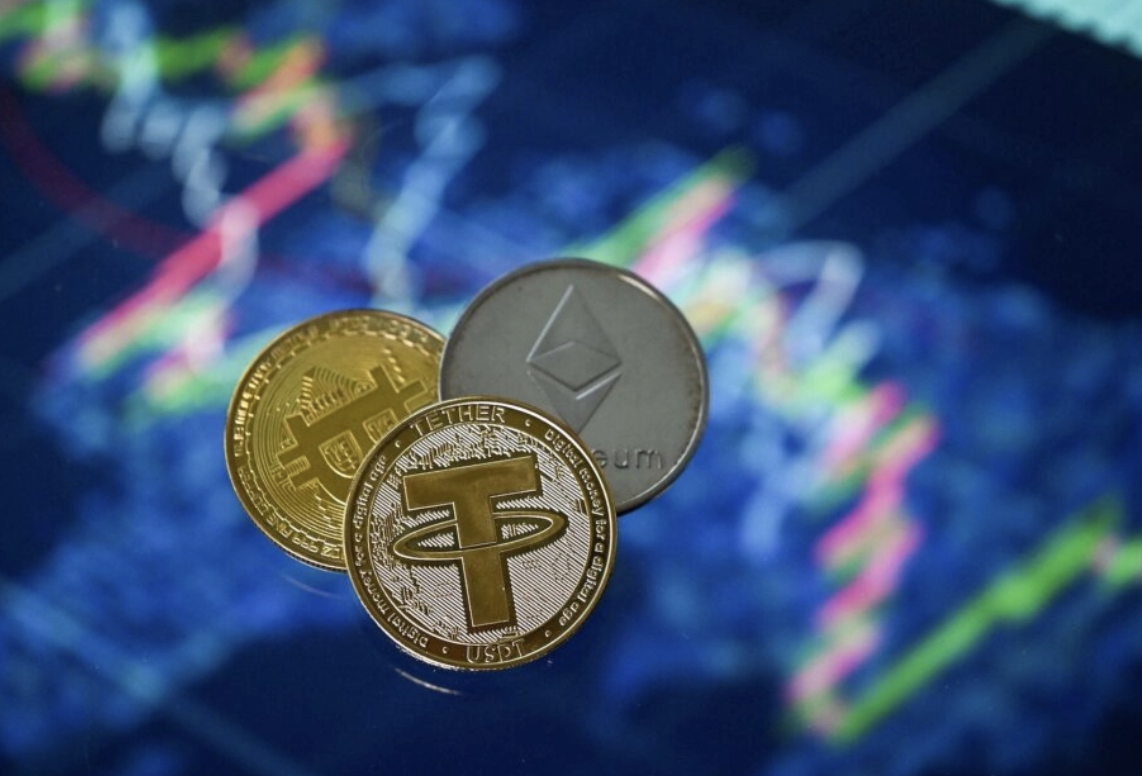
In a report released in January, Chain Analysis, a firm that tracks cryptocurrency transactions, estimates these groups of criminals move more than $16 billion in illicit funds through crypto.
It made up a significant share of the global illegal crypto economy last year.
Chain Analysis says Chinese money laundering networks were responsible for nearly 20% of all illegal crypto activity last year.
That works out to about $44 million a day.
A lot of this activity is coordinated on Telegram, where private chat groups advertise money laundering services.
Cryptocurrency remains appealing because it allows money to move quickly across borders, and it has less regulations compared to traditional banks.
Experts say it is just one layer of a broader laundering operation.
Many of these networks also move money through legitimate-looking businesses like casinos, where inflated revenue can disguise criminal activity.
Southeast Asia has become a major hub for these operations.
Countries like Cambodia and Myanmar have seen an increase in casinos and scam centres tied to organised crime.
They usually operate in areas with less regulations and more corrupt local officials.
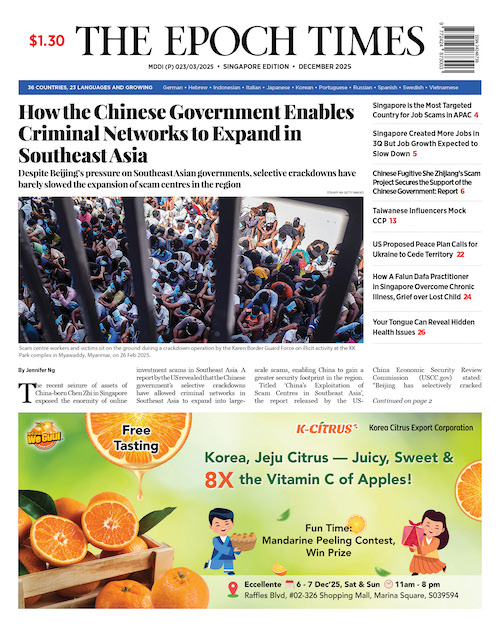
One of the syndicates is Chen Zhi, a Chinese-born Cambodian national who was sanctioned jointly by the U.S. and U.K. for online scams whom experts have said has ties to the CCP.
Chen, through his company Prince Group and accomplices, were sanctioned jointly by the U.S. and U.K. last October in what was described as the “largest action ever targeting cybercriminal networks in Southeast Asia” for online investment scams targeting Americans and others worldwide.
Chen was extradited from Cambodia to China on Jan. 6 but Beijing had not issued a warrant for his arrest at the time of his extradition.
Neither did the Chinese nor the Cambodian government disclose the nature of Chen’s crimes, in contrast with the joint notice of sanction by the U.S. and the U.K, which provided names, identification numbers and business registration numbers of all 146 sanctioned individuals and entities.
Tang Jingyuan, a veteran China affairs analyst, told the NTD that “Chen has connections to the Cambodian regime and authorities.”
Chen is close to the Cambodian government being appointed the senior advisor to the former prime minister of Cambodia Hun Sen, the father of the current prime minister Hun Manet. Chen was also awarded the highest title “Neak Oknha” bestowed by Cambodia’s king.
He said, “Chen also has very deep connections to the CCP. He is closely linked to the CCP’s political and legal apparatus.”
Chen’s extradition to China came 3 days after the capture of former Venezuelan president Nicolas Maduro by U.S. forces on Jan. 3, which suggests that the CCP is afraid that the U.S. could pull a similar stunt on Chen.
“It is highly unlikely that the CCP would hand Chen Zhi directly over to the United States because once he arrives, Chen could reveal a great deal of information that would be extremely damaging to the CCP,” Tang added.
According to a former Chinese spy who worked for the CCP’s top intelligence agency, the Ministry of State Security, Chen has links to the CCP.
The spy recently told Radio Canada International that the CCP helped him land a manager role at Prince Group, a role that served as a cover for the CCP’s covert operations.
He said one of his primary tasks was tracking Chinese dissidents both at home and abroad.
Taking action against the dissidents when necessary was also part of his role, he added.