By Emel Akan and Cecilia Lim
News Analysis
Globalisation, which has shaped the world economic order over the past few decades, was already in trouble before the pandemic. And with the emergence of COVID-19, the retreat from global economic integration has gained momentum, setting in motion a global reordering that’s expected to play out over decades.
For the United States, President Donald Trump said that the lessons learned from the pandemic vindicate his ‘America First’ policies.
While he came under fire for his protectionist stance, which has caused a fundamental shift in the world trade order in the past few years, the pandemic has proven that he was right and globalists were wrong, he said.
“Stupid supply chains” are all over the world, he said, noting that “one little piece of the world goes bad and the whole thing is messed up”.
With the pandemic, public opinion has also shifted against globalisation. People in the United States and elsewhere have been disturbed to find that their health depends on China, which is the dominant supplier of protective equipment and crucial drugs.
Overreliance on a single country for life-saving equipment and medicines during the pandemic has exposed the vulnerability of global supply chains. It’s also raised concerns about the purity and safety of thousands of drugs that are made in China.
The World After the Pandemic
The post-pandemic order will be very different, as many governments across the world are also giving up on globalisation and talking about decoupling from China.
Indian Prime Minister Narendra Modi took to national television on May 12 to announce his new stimulus package, with an ambition to create “a self-reliant India”. The plan is expected to boost the “Make in India” initiative and the country’s manufacturing capacity.
In April, Japan’s prime minister, Shinzo Abe, announced that his government was setting aside more than US$2 billion in funds to help Japanese firms shift production out of China.
President Emmanuel Macron of France told the Financial Times on April 16 that the pandemic “will change the nature of globalisation, with which we have lived for the past 40 years”, adding that “it was clear that this kind of globalisation was reaching the end of its cycle, it was undermining democracy”.
The economic recovery plan drafted by the European Union highlighted the importance of building “strategic autonomy” in vital supply chains and reducing reliance on third countries.
“We’ve effectively crushed globalisation,” Michael O’Sullivan, author of the book ‘The Levelling: What’s Next After Globalisation’, told The Epoch Times.
Normally, in this kind of crisis, he said, countries tend to create an international coordination group “to save the world”.
Instead, big powers are now at odds with each other, squabbling over medical supplies and racing to ban exports of ventilators, masks, and other personal protective gear, he said.
In the post-pandemic world, the whole idea of a multipolar world will come into more focus, he said.
O’Sullivan, in his book, describes the new world order in a post-globalisation era, in which three major players will dominate geopolitics: China-centric Asia, the Americas, and Europe.
Reducing Reliance on China
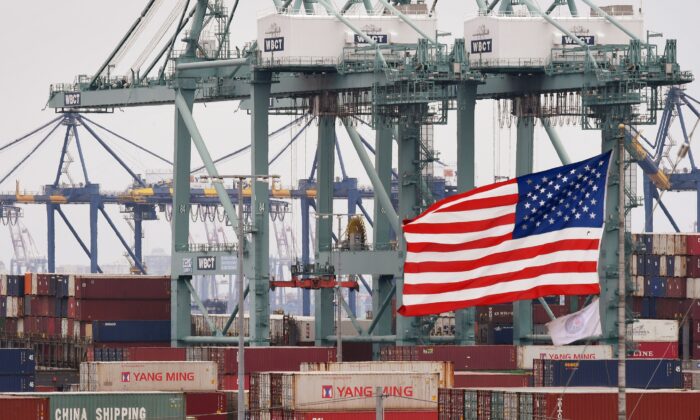
The modern economy has gone through several phases of globalisation. The most recent wave led by China and India reached an unprecedented level, with China fuelling it after its acceptance into the World Trade Organisation in 2001.
Since then, the global economy has been growing more dependent on China. China is a major personal protective equipment and drug supplier. In addition, China accounts for more than half of the global trade of telecommunications equipment in volume in 2018, according to The Economist.
Even after the trade war broke out between the US and China, foreign direct investment into China still expanded by three percent annually, roughly on the same level as the previous five years.
However, the COVID-19 pandemic may cause a shock to the global supply chain many orders of magnitude larger than the trade war or the persistent protests on the streets of Hong Kong.
“As a result of COVID-19, it is likely that this period of globalisation will not only come to a halt, it will reverse,” states a report by the Economist Intelligence Unit (EIU) released on May 13.
The report suggests that more companies will relocate parts of their supply chains out of China due to COVID-19.
The report also highlights that for certain industries of which relocation costs are high, like the auto industry, such a shift would be lasting.
Many observers and researchers have pointed out that the pandemic could accelerate the decoupling between the United States and China.
Similar to the manner in which different countries reacted to the supply chain disruptions, the Trump administration has ramped up efforts to make the United States “more independent, self-sufficient, and resilient”.
There is a strong bipartisan push within the US to craft legislation to reduce reliance on Chinese products, which accounted for almost 18 percent of US imports of goods in 2019.
The virus, which has sent shock waves through supply chains, has also forced company boards to rethink the risks associated with their business models.
In an apparent win for the Trump administration’s efforts to bring manufacturing to the United States, Taiwan Semiconductor, the world’s largest contract chipmaker, on May 14 announced plans to build a production factory in Arizona.
Companies will face pressure from shareholders, regulators, and governments to make supply chains more local and resilient to prevent future shocks. However, moving supply chains may take longer than predicted, according to Jim Reid, a Deutsche Bank strategist.
He suggested that “this structural effect will take decades, not years, to feed through”.
Implications for Asia
For Asian countries that mostly have been thriving on trade integration, deglobalisation may be an alarming trend. However, the actual impact need not be necessarily pessimistic.
Relocations of supply chains by multinational companies could mean “an Asian supply chain network that is both less China-focused and more diverse”, according to the EIU report.
Prior to the pandemic, companies of certain industries have shifted supply chains to Southeast Asia due to the trade war. Last year, Apple asked its top suppliers to consider moving 15 to 30 percent of their production to Southeast Asia from China in an effort to diversify its supply chain.
It also started the process of moving the manufacturing of AirPods, its popular wireless earbuds, to Vietnam from China.
Similarly, post-pandemic supply chain diversification over the rest of Asia may be a boon to countries like Vietnam and Malaysia.
High-end manufacturing related technologies such as robotics, automation, artificial intelligence and 3D printing may become more relevant, as they could reduce the manpower and land needed for production.
Japan’s high investment in such advanced manufacturing technologies might be one of the contributing factors to its recent decision to move its firms out of China. “This suits Japan’s skilled but shrinking population and limited availability of land on which to base operations,” said John Lee, senior fellow at Hudson Institute.
In 2017, Japan ranked 4th in robot density, which measures the number of robots per 10,000 workers in an industry. It is not the only Asian country that has invested heavily in robotics—South Korea topped the rank while Singapore ranked 2nd on the list.
Finally, a more fundamental lesson to be drawn from China and its mishandling of the COVID-19 outbreak is to ensure transparency and accountability in governance to build robust and trustworthy partnerships.