US President Donald Trump announced an end to Hong Kong’s long standing preferential status as retaliation against the Chinese Communist Party’s (CCP) controversial national security law to ban “activities” that endanger national security.
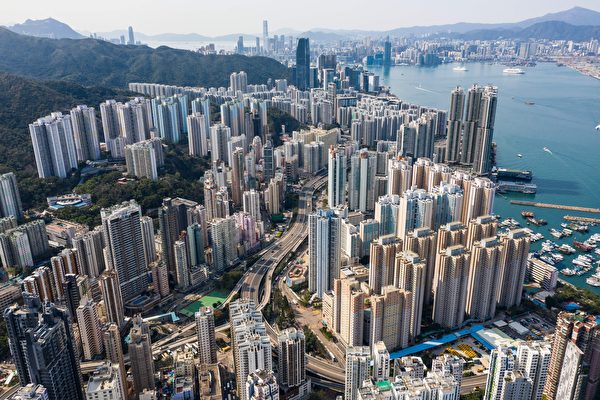
Trump’s removal of Hong Kong’s special economic status has thwarted the regime’s plan to leverage the city as a global finance and trading centre. The move pressured the regime, which counts on China’s economic and financial stability to sustain itself.
While details have yet to be announced, Trump said the US would immediately cease agreements that have comprised Hong Kong’s special status, including ending the US-Hong Kong extradition treaty and applying the same US export controls to Hong Kong that are currently applied to China. Here’s a broad view of what’s at stake.
1. Banking and Finance
In an interview with Radio Free Asia, Professor Yin Zunsheng from Seton Hall University’s School of Business, said that Hong Kong being China’s largest offshore trading centre, is irreplaceable in financial importance to the mainland.
The Hong Kong Stock Exchange, connected to the exchanges in Shanghai and Shenzhen, forms a gateway between mainland Chinese and international investors.
Yin said it is wishful thinking for Macau, Shenzhen or Shanghai to replace Hong Kong as China’s largest offshore trading centre in its bid to internationalise the RMB, as 70 percent of RMB is traded in Hong Kong.
“(Hong Kong) acts as an external window for China and as a financial market with little involvement in China. If this status is affected, there will still be a great loss (to China),” he said.
Despite the sanctions, the CCP may claim that Hong Kong continues to be economically viable with what the regime can offer, though works are underway to turn neighbouring Shanghai and Shenzhen into alternative centers for international finance.
“It’s hard to see how Hong Kong could remain the Asian financial center that it’s become if China takes over,” said White House national security adviser Robert O’Brien on May 24.
► READ: Hongkongers Rush to Exchange HKD to USD While Foreign Currencies Run Out
2. Global Economic Relations
Hong Kong, bridging China to the rest of the world through its economic and trade privileges, serves as a gateway for 58 percent of China’s outbound investment and international transactions.
Chinese firms have been exploiting Hong Kong’s favourable transshipment status to export goods to the EU and US at a low tax rate.
With the island’s entitlement to trade exemptions removed – and with the US treating Hong Kong as just another Chinese city – these same companies will have to be subjected to higher taxes and tariffs imposed by the US on Chinese goods, amidst the US-China trade war.
3. Foreign Direct Investment
Multi-faceted uncertainties have accelerated the outflow of foreign capital, multinational companies and talent from Hong Kong, said Professor Cui Dawei of Hong Kong University of Science and Technology and Director of the China Center for Transnational Relations.
In an interview with Radio Free Asia, Cui said that international firms were drawn to Hong Kong’s economic stature, its geographic location and easy entry into the Chinese market, but the appeal has since faded.

Cui noted that while US foreign direct investment in Hong Kong was US$82.5 billion in 2018, a 1.6 percent increase from 2017, the growth is unlikely to sustain for long.
Stephen Young, former consul general to Hong Kong and Macau, told VOA that large corporations have relocated their regional headquarters to Singapore or Tokyo or have deprioritized Hong Kong as a smaller scale operation.
While investors may have foreseen the business risk of operating in Hong Kong, their decision to leave or not to invest at all could have been triggered by a different reason.
4. The CCP’s interference
Foreign investors have long expressed concerns about the CCP’s interference in Hong Kong affairs, in fact, long before the anti-extradition bill protest in 2019. This was pointed out by Charles Mok, who represents the Hong Kong science and technology community in the Hong Kong Legislative Council (LegCo),
Mok told the Washington Post in April that LegCo members had met representatives from a large US social media company in 2018 to explore the setting up of a data center in Hong Kong.
“In our talk, we assured them for two hours that rule of law in Hong Kong comes first, but they were concerned about interference from China (the Chinese Communist Party) and whether this will become a problem.”
Mok said that the company’s executives were to visit Hong Kong government officials later that year, but the trip was called off, following news of a visa non-renewal for Financial Times editor, Victor Mallet.
5. “Find-and-Change”
The passing of the national security law and the end of the island’s preferential trade status have likewise triggered a “find-and-change” frenzy among residents who feared the Hong Kong dollar would be unpegged from the US dollar.
Money changers have reportedly turned away customers who rushed to convert large sums of local banknotes into the US currency, with single-exchanges in excess of millions of USD.
In a South China Morning Post report, Hong Kong Monetary Authority chief executive Eddie Yue Wai-man said the peg would remain the bedrock of the city’s financial system, with foreign reserves of more than US$440 billion.
While Yue said there was no noticeable sign of fund outflows from the Hong Kong dollar or banking system, it remains to be seen if global investors felt otherwise.
The CCP’s new security law on Hong Kong may have created the opposite effect, that left what could have been Asia’s financial hub, hanging in the balance.