COMMENTARY
Singapore’s consumer price index-all items (CPI-AIl Items) rose 0.9% in 2025, slower than the 2.4% increase in 2024, according to the Ministry of Trade and Industry (MTI)’s statement published on Jan.23.
“For 2025 as a whole, MAS Core Inflation averaged 0.7% falling from 2.8% in 2024,” it stated.
MAS Core Inflation excludes accommodation and private transport.
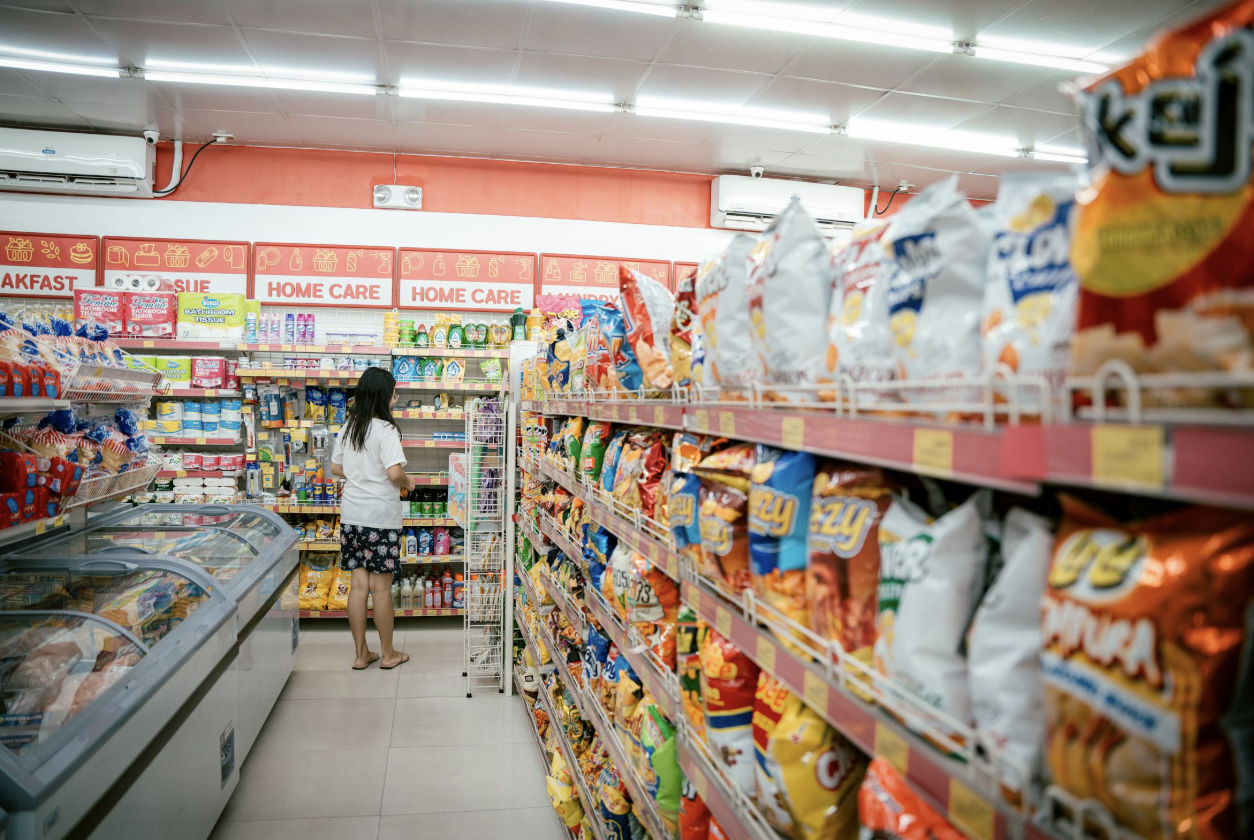
There was a broad slow down in prices last year, mostly in non-essential items while prices for household essential items had generally increased in 2025.
Prices of non-essential items like household durables & services, information & communication, recreation sport & culture as well as miscellaneous goods & services had generally fallen last year.
Included in transport were other transport services and transport services of goods which also fell 2.2% and 0.7% year-on-year in 2025 respectively.
Prices of essential goods and services had generally increased in 2025 except for electricity & other fuels, medicine & health products, inpatient and outpatient care services, and clothing & footwear.
Prices of electricity & other fuels fell 0.6% as global oil prices eased amid slower demand from a year ago.
Medicine & health products as well as outpatient and inpatient care services saw prices falling by 0.9%, 0.3% and 0.1% from the previous year respectively.
Clothing & footwear prices also fell by 0.9%.
Prices for essential goods such as food, accommodation, health insurance and other health services, transport, and education had increased in 2025.
Food prices went up across the board except for fish & other seafood which fell 1.4%. Sugar, confectionery & desserts as well as oils & fats saw the highest increase in prices among food items, rising 3.8% and 3.6% from a year ago respectively.
Accommodation is ‘imputed rentals for housing’ which increased by 0.8% in 2025.
Overall prices for health services increased by 2.7% driven by an increase in prices in health insurance by 12.7% and other health services by 2.1%.
Public transport and private transport saw the highest price increases by 5.1% and 2.5% respectively.

Prices for education items increased across the board. Private tuition & other educational courses as well as school textbooks & study guides saw the highest price increases of 1.9% and 0.7% respectively.
Historical Low Inflation
2025 saw one of the historically low inflation rates for Singapore in over 50 years.
Singapore’s CPI is typically between 1% to 3%.
Its CPI went below 1% during periods of crises such as the Asian financial crisis (1998 to 1999), the global financial crisis (2009), oil price crash (2015 to 2016) and COVID-19 pandemic (2020 to 2021).
During the recent COVID-19 pandemic, inflation was around -0.2% to 1% due to demand shock from lockdowns.
Demand bounced back quickly post COVID-19 as reflected by CPI of 6.1% (2022), 4.8% (2023) and 2.4% (2024).
Singapore’s inflation is relatively low as compared with developed economies like the U.S. at 2.4% in 2025 and the EU at 2.4% in November 2025, both of which had positive economic growth. Singapore’s inflation was also below IMF and World Bank’s forecast of world inflation of between 4.5% to 5.0% for 2025.
Singapore’s CPI is still higher than China’s, the world’s second largest economy who is still classified as a developing country. China’s CPI of between 0% to 0.7% in 2025 signals deflationary pressure from weak consumer demand and falling factory prices.
What is driving the low CPI?
Singapore’s low CPI is likely attributed to its strong currency.
Low inflation is often attributed to weak demand, slower growth, falling global prices, and strong currency.
Singapore’s GDP growth of 4.8% in 2025 indicates relative healthy demand globally given its open economy and is primarily dependent on exports. Its GDP growth rate is higher than the world and the U.S, the world’s largest economy. The world’s economic growth is projected at around 3.2% by the IMF while GDP growth for the U.S. is projected at around 2.5% to 2.8% for 2025.
Although global prices have been falling, they remain healthy.
Most global forecasts show that world inflation in 2025 remained around 3% to 4% which reflects increasing prices but at a slower rate from the high inflation from the post COVID-19 pandemic years of 2022 to 2023.
Global commodity prices were forecast to fall to around 7% in 2025 due to weak growth and oversupply but prices of other goods and services remained high such as housing and some foods.
Singapore’s low CPI is likely due to its relatively strong currency which it actively manages to control inflation.
Unlike the U.S. dollar or the euro, the Singapore dollar is not a free-floating curency. The Monetary Authority of Singapore (MAS) manages the Singapore dollar using a system called the Singapore Dollar Nominal Effective Exchange Rate (S$NEER). The Singapore dollar is weighed against a basket of currency.
Given that it imports 70% to 80% of consumer goods, maintaining a strong currency helps Singapore to import goods at lower costs, thereby keeping CPI low.
Although its strong currency rate could potentially reduce its exports, Singapore exports and produces high-value and specialised goods and services which are less sensitive to price changes than commodities or low-cost manufacturing goods. Singapore’s high-value and specialised goods include semiconductors and advanced electronics (35% to 45%), financial services (35% to 40%), petrochemicals & specialty chemicals (15% to 20%), and pharmaceuticals & biomedical products (10% to 15%).