In a hearing titled India-China and the balance of power in the Indo-Pacific, the US-China Economic and Security Review Commission heard from experts on the critical role of India in US-China competition while acknowledging constraints.
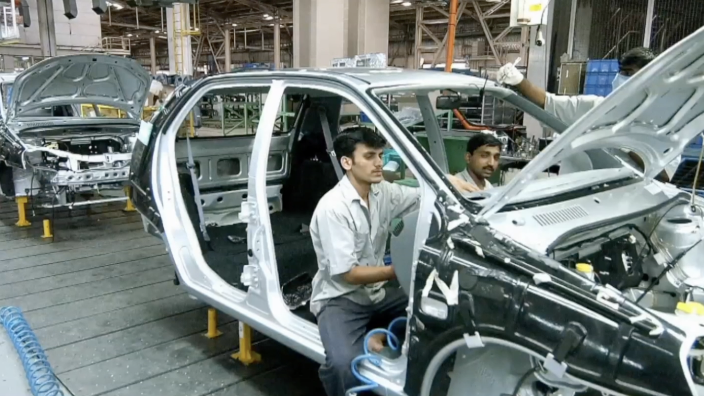
Commissioner Jonathan Stivers said at the hearing in Capitol Hill, Washington D.C. that India is the best option to replace a significant share of China’s role in the global supply chain.
“With rising national security concerns and a slowing economy in China, companies are seeking to diversify their supply chains out of the country,” he said.
Stivers says India has a dynamic entrepreneurial spirit as well as a strong science, technology, engineering, and mathematics (STEM) pipeline for high-skilled workers.
“Perhaps more importantly, India’s democratic system and adherence to the rule of law create the underlying conditions for fair and transparent commerce,” he said.
However, India faces a difficult balancing act with China, weighing economic security against the needs of industrial development.
Stivers said, “India is a top supplier of our generic drugs, yet India relies extensively on China for the pharmaceutical ingredients and key startup materials.”

Soumya Bhowmick, Fellow of Observer Research Foundation told the panel, “China also accounted for 16 per cent of India’s total imports, and these figures highlight the fact that China, for India, is not just a marginal trading partner, but it is a system-scale supplier whose inputs are deeply embedded in Indian production.”
“Over the last two decades, Indian policymakers have gone from seeing China as a potential enabler to more of an obstruction in achieving India’s objectives,” said Tanvi Madan, Senior Fellow of Brookings Institution.
Stivers said a strong and economically vibrant India is in the national interest of the U.S., especially as strategic competition with China intensifies.
“India’s scale, demographic, economic, military makes it the only country in Asia with the potential to serve as a long-term counterweight to China’s regional dominance,” he said.
The need for transparency with pharmaceutical ingredients was also raised.
“When I buy a t-shirt, I can find out where the cotton was made, I can find out where the labour was, the carbon footprint,” said Chan Harjivan, Visiting Fellow of Duke-Margolis Institute for Health Policy. “When I put a pill in my mouth, I have no idea where it’s from.”