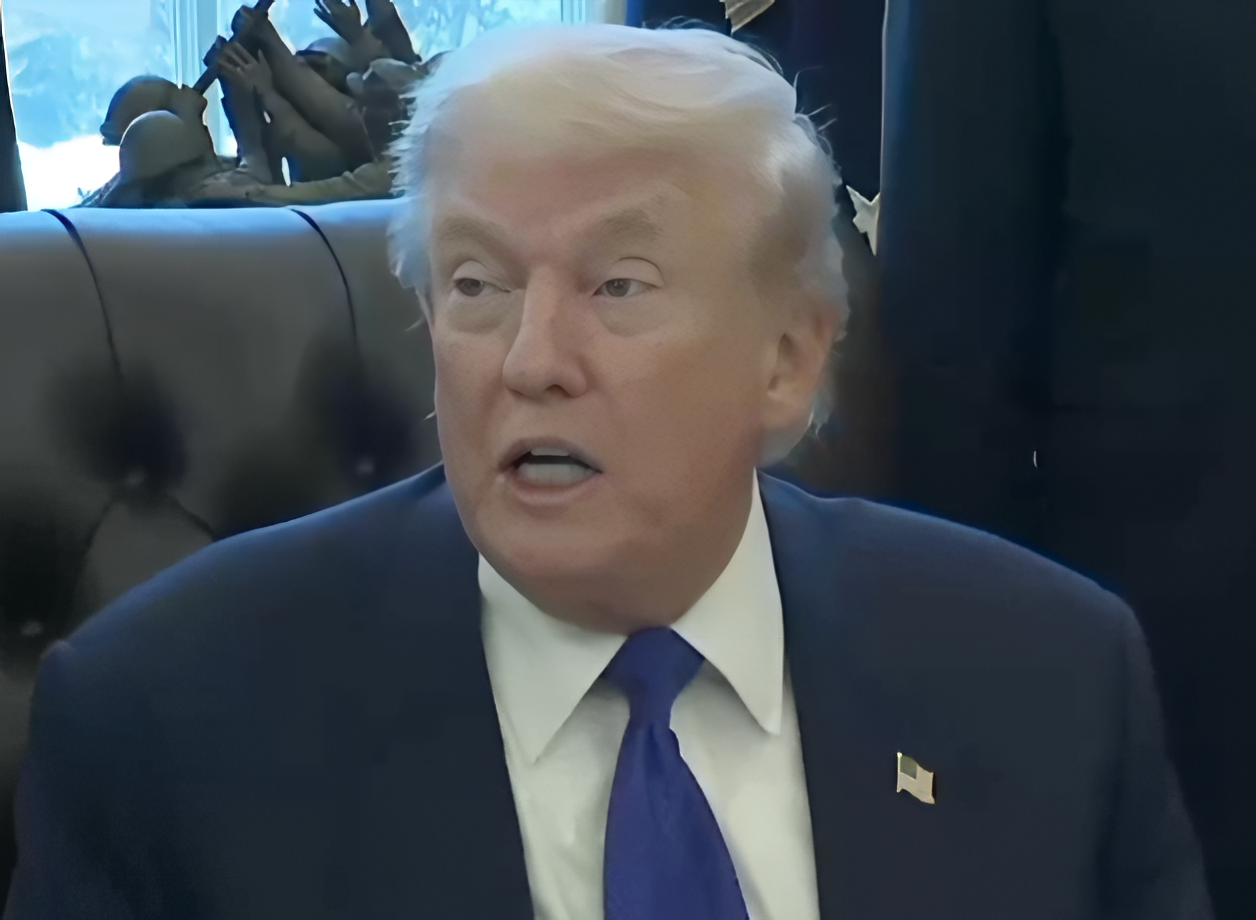
U.S.President Donald Trump on Monday unveiled a US$12 billion (SG$15.2 billion) critical mineral reserve initiative in efforts to curb dependence on China’s rare earths.
“Yes, as we have long had a strategic petroleum reserve and a stockpile of critical minerals for national defence, we’re now creating this reserve for American industry, so we don’t have any problems,” Trump said.
The initiative called Project Vault, involves procuring and stockpiling critical minerals to allow participating manufacturers to access them during market dislocations, thus safeguarding against price volatility or geopolitical disruption.
It is a combination of US$10 billion (SG$12.7 billion) in export-import bank financing and $2 billion (SG$2.5 billion) in private sector financing.
Several major corporations and commodities trading firms are expected to be involved in procurement and supply management under the programme’s structure.
Trump added that he expects taxpayers to make a profit from the interest in the loan used to start the initiative.
Trump’s announcement came after the Chinese Communist Party (CCP) started tightening rare-earth exports globally last year, widely seen by experts as leverage in trade negotiations with the U.S.
The CCP added export controls on seven medium and heavy rare earth elements and related materials, requiring licenses for exports as part of broader export-control policy moves amid rising trade tensions with the U.S. and other economies. These controls targeted materials used in industries such as defense, electronics, and electronic vehicle (EV) motors.
It also significantly tightened export control by including a wider range of materials and restricting the export of technologies used in mining, processing, recycling and magnet production. The export controls include extra‑territorial provisions for some uses and tighter approval rules for exports to defense and semiconductor users.
Although the CCP suspended several of the export control announcements it had issued last October until November this year following high-level negotiations between the U.S. and CCP officials, core controls on certain rare earths remain in force.
CCP’s moves have had real effects on global high-tech supply chains, affecting electronics, defense-related components, and semiconductor materials. The moves prompted other countries like India and Japan to diversify supply sources away from Chinese rare earth dependency.