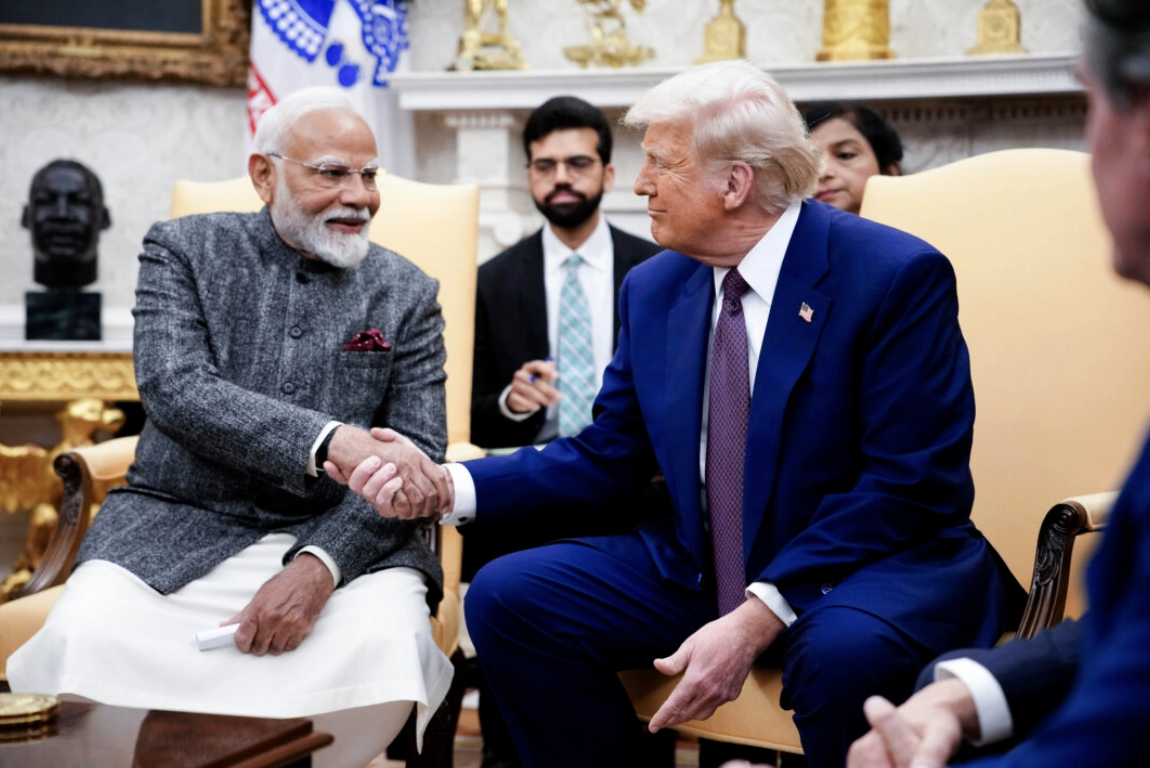
U.S. President Donald Trump said on Monday India will stop buying oil from Russia.
Trump said India will start buying more oil from the U.S. and Venezuela.
He made the announcement after a call with India’s Prime Minister Narendra Modi where they spoke about wide-ranging issues from trade to ending the war in Russia and Ukraine.
Trump also announced the U.S. will immediately reduce its tariffs on India from 50 to 18 per cent, while India reduces its tariffs on the U.S. goods to zero.
He said Modi has also committed to “buying more American, in addition to committing to over $500 billion worth of investments in U.S. agriculture, technology, and coal.
Trump said in a Truth Social post in August last year that India is fuelling the war between Russia and Ukraine.
“India is not only buying massive amounts of Russian Oil, they are then, for much of the Oil purchased, selling it on the Open Market for big profits. They don’t care how many people in Ukraine are being killed by the Russian War Machine. Because of this, I will be substantially raising the Tariff paid by India to the USA. Thank you for your attention to this matter!!!” Trump wrote.
India’s High Tariffs on U.S. Goods, Non-Tariff Barriers
Trump had previously said that India applies high tariffs on many U.S. products, some of which are much higher than U.S. tariffs on Indian goods in addition to non-tariffs barriers on the U.S.
Tariffs on vehicles, motorcycles, agricultural products, and certain foods can be anywhere from 45 to 150 per cent on some goods.
India’s average tariff rate on U.S. imports is among the highest for major economies.
U.S. exporters and trade officials often point out these duties make American goods much more expensive in India than Indian goods are in the U.S.
In addition to tariffs, the U.S. flags several non-tariff challenges in India that increase costs and delays for U.S. exporters.
These include import bans and licensing requirements, customs valuation rules and inspections, domestic testing, certification requirements, opaque or unpredictable regulatory processes.