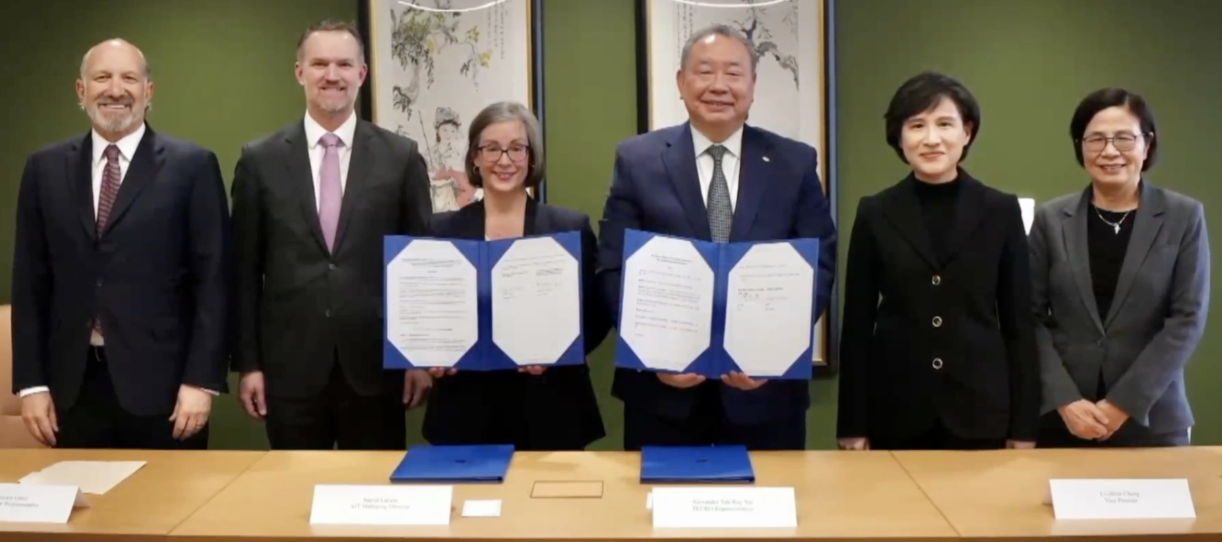
The U.S. and Taiwan have locked in a new economic partnership on Friday.
The U.S. now has a 15 per cent tariff on Taiwan, down from the 20 per cent initially imposed.
In return, Taiwan agrees to substantially roll back its tariffs on the U.S. including a 26 per cent tariff on farm goods.
On U.S. pork, Taiwan is dropping its tariffs from 40 per cent down to 10 per cent.
The two countries are also committing to buy tens of billions of dollars in American liquid natural gas, aircraft and engines over the next few years.
U.S. Trade Ambassador Jamieson Greer called it a win for American producers.
“This agreement also builds on our longstanding economic and trade relationship with Taiwan and will significantly enhance the resilience of our supply chains, particularly in high technology sectors,” he said.
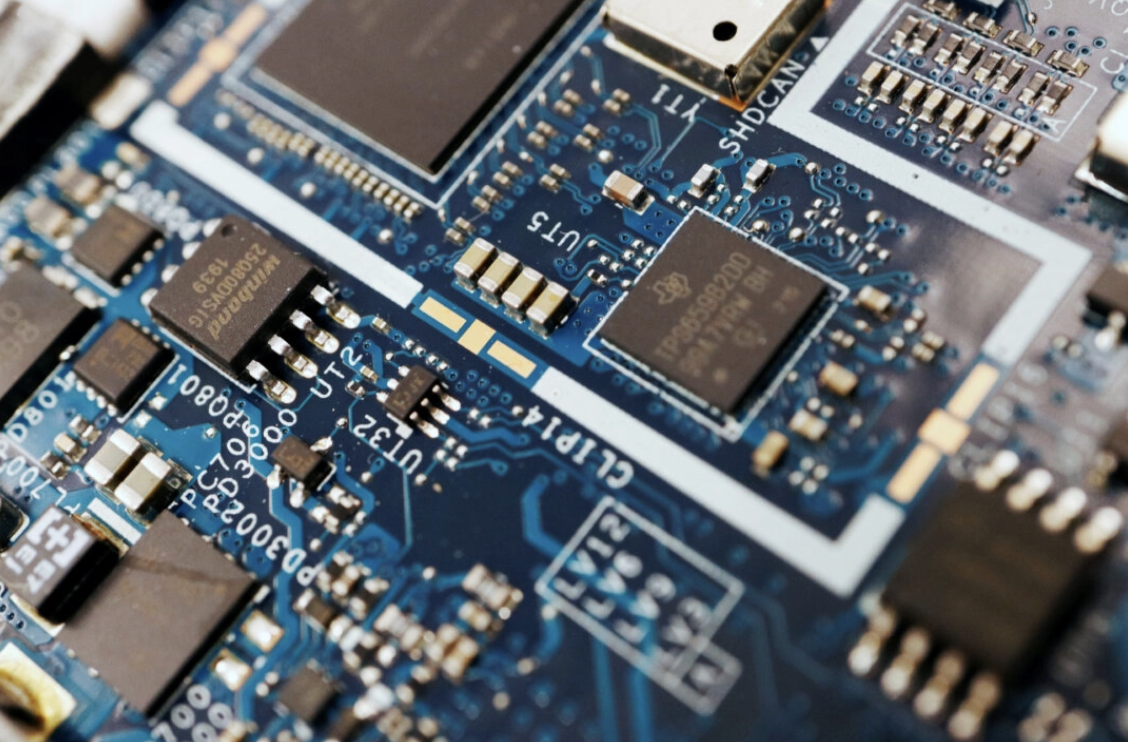
The deal also grants Taiwan’s chip imports preferential treatment into the U.S.
Taiwan’s President Lai Ching-te commented on the importance of the trade deal between the two countries.
“This round of tariff negotiations is a very important opportunity. Its purpose is to enable our industries to go global,” he said.
Taiwan’s Vice Premier Cheng Li-Chiun said that this trade deal will keep peace in the region as the Chinese Communist Party (CCP) has been increasing its threats of taking over the democratic island.
She said, “Future cooperation between Taiwan and the United States (3:40) will not only be mutually beneficial, but also stabilise peace, stability and prosperity in the Indo-Pacific region.”
In the U.S., lawmakers have overwhelming bipartisan support for Taiwan and the deal is seen as a major boost for Taiwan’s defence.
John Moolenaar, Chairman of the U.S. Select Committee on the CCP said any weakness in Taiwan’s defence will threaten U.S. allies.
“If Taiwan falls, the Chinese Communist Party will control the centre of gravity along the first island chain, directly threatening U.S. allies such as Japan and the Philippines, constraining U.S. military operations,” he said.
Chinese leader Xi Jinping has ordered the Chinese military, People’s Liberation Army (PLA), to be ready to take over Taiwan by 2027.
“That reality makes 2026 an important year, one in which we must prepare at home and abroad for all scenarios,” Moolenaar added.
However, Taiwan’s opposition parties vowed to rigorously scrutinize the trade deal, citing potential issues with reaching the goal of net zero carbon emissions by 2050, increasing drug costs and limiting the scale of chips factories overseas, according to the Taipei Times.
U.S. lawmakers said that the deal is more than trade.
They said it is about deterring the CCP.