High-stakes talks between the U.S. and Iran were held in Oman on Friday to reach a deal to prevent Iran from obtaining a nuclear weapon.
U.S. President Donald Trump said the U.S. will take military action against Iran if they fail to reach a nuclear deal.
Tehran said it is ready for a U.S. attack.
The day before the talks on Friday, Iran unveiled what it called one of its most advanced long-range ballistic missiles.
And on the other hand, the U.S. Central Command released a time-lapse video of an aircraft carrier south of Iran, saying “what looks like a random rush of jets and people is actually a well-orchestrated routine.”
Several U.S. warships are currently deployed to the south of Iran.

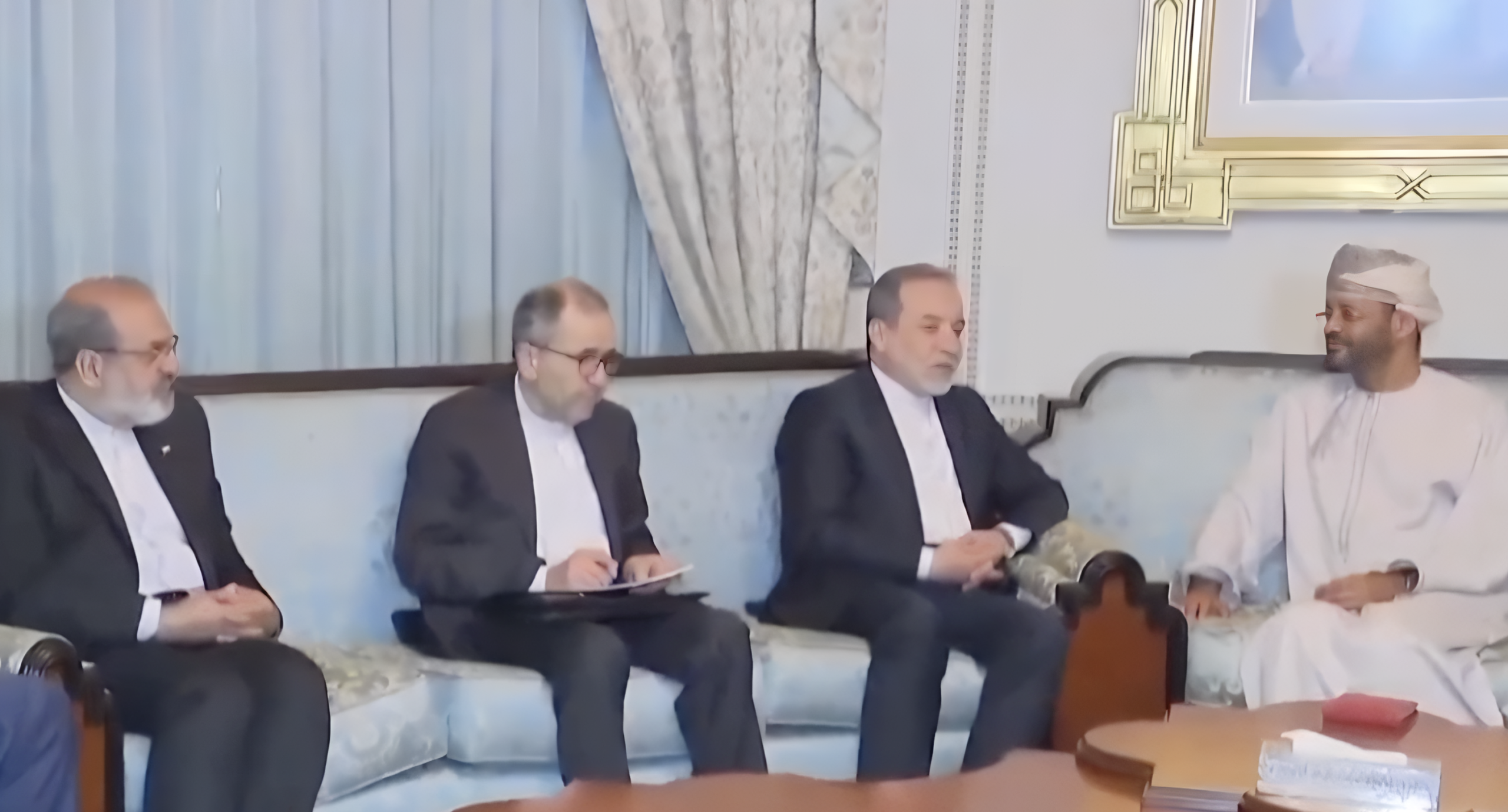
On Friday, Oman’s Foreign Minister Badr bin Hamad Al Busaidi also met with a delegation from the U.S., including U.S. Envoy Steve Witkoff and Trump’s son-in-law Jared Kushner.
And for the first time, the U.S. brought its top military commander in the Middle East to the table.
After the talks, Araghchi said “the prerequisite for any dialogue is refraining from threats and pressure.”
“I think it was a good start, a good beginning. And now we have to go back to our capitals and discuss—you know— the question with our superiors and explain what happened during these negotiations. And we will decide for the next round, inshallah,” he added.
The U.S. did not immediately come in after the talks.
However, the U.S. Central Command later posted pictures on X of U.S. warships south of Iran with a message saying “peace through strength.”
Shortly after the talks, the U.S. announced new sanctions targeting Iran’s Shadow Fleet, which is an underground network of ships used to dodge sanctions and sell Iranian oil abroad.
The new sanctions are aimed at stopping the flow of revenue that the Iranian regime uses to support its terrorist activity abroad, such as Hamas, the Houthis, and Hezbollah.